
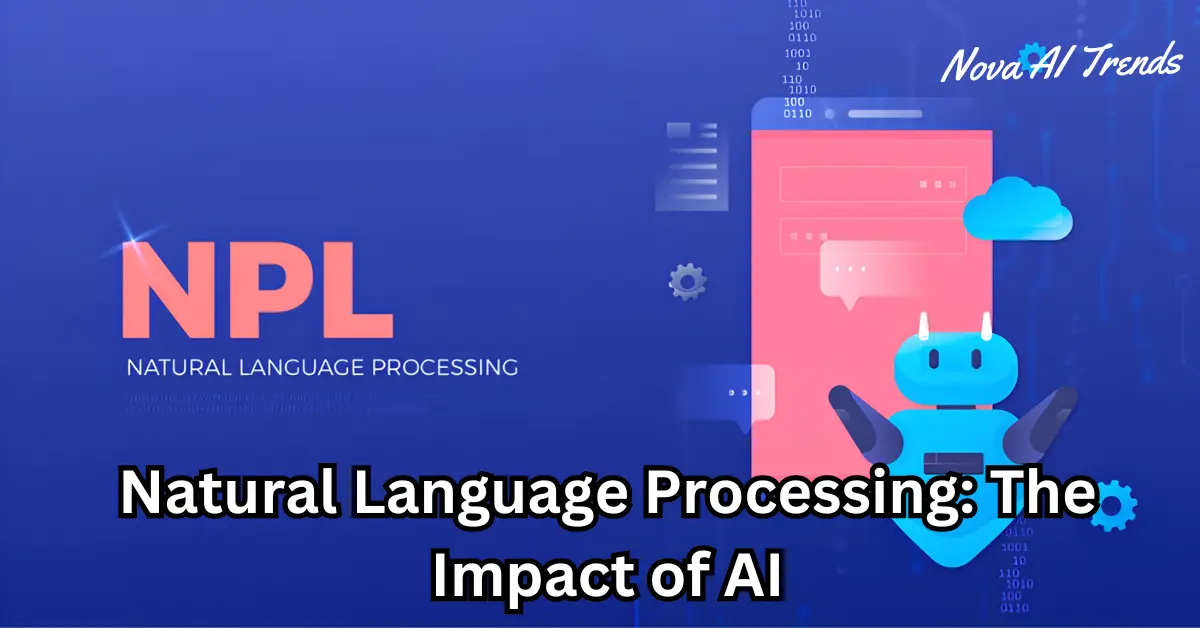
Natural Language Processing: The Impact of AI
AI has taken astounding steps in Natural Language Processing (NLP), changing how PCs get it and collaborate with human language. This article gives an outline of AI advancement in NLP, its applications across different areas, the difficulties it faces, and what’s to come patterns forming its direction

Evolution of AI in NLP
The evolution of AI in NLP is a demonstration of the steady quest for etymological knowledge. At first, NLP relied on rule-based frameworks, which utilized predefined syntactic guidelines to dissect and handle text. Nonetheless, the inflexible idea of these frameworks restricted their flexibility and adaptability. The coming of factual methodologies presented a change in perspective, permitting calculations to gain designs from information and make probabilistic forecasts. This period saw the development of AI methods, for example, Guileless Bayes and Backing Vector Machines, which empowered huge advancements in errands like archive arrangement and opinion examination.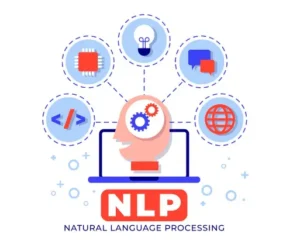
The main jump, nonetheless, accompanied the ascent of profound learning. Brain organizations, especially repetitive and convolutional designs, reformed NLP by empowering calculations to handle consecutive information and catch mind-boggling semantic examples. The presentation of models like Word2Vec and GloVe worked with the production of thick vector portrayals for words, upgrading the proficiency of NLP calculations. Besides, the improvement of consideration systems and Transformer designs, coming full circle in models like BERT and GPT, propelled NLP higher than ever in execution and exactness. These models influence enormous scope pretraining on message corpora to learn context-oriented portrayals of language, empowering them to succeed in an extensive variety of NLP errands, from language understanding to text generation.
Applications of AI in NLP
AI-powered NLP has found boundless applications across assorted areas, changing ventures and upsetting client encounters. In healthcare, NLP calculations dissect clinical records and exploration writing to help clinicians in analysis and therapy arranging. By extricating bits of knowledge from unstructured clinical information, these calculations empower medical services suppliers to pursue information-driven choices, work on understanding results, and lessen clinical mistakes. Essentially, in finance, NLP assumes a significant part in feeling examination and market forecast. By breaking down news stories, online entertainment channels, and monetary reports, NLP calculations furnish dealers and financial backers with significant experiences in market patterns and feeling shifts, empowering them to pursue informed choices and moderate dangers.
Virtual assistants, powered by NLP, have become omnipresent in our day-to-day routines, giving customized help and smoothing out errands. These aides, like Amazon’s Alexa, Apple’s Siri, and Google Collaborator, influence NLP calculations to comprehend client inquiries and execute orders, going from setting suggestions to controlling shrewd home gadgets. Additionally, AI-driven chatbots have changed customer service by offering moment and customized help to clients. These chatbots, conveyed on sites and informing stages, use NLP calculations to comprehend client requests, resolve issues, and handle exchanges, in this way improving client fulfillment and decreasing functional expenses for organizations.
Challenges and Limitations
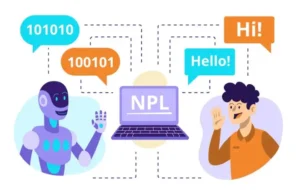 Despite its extraordinary potential, AI in NLP faces a few difficulties and restrictions. One of the essential difficulties is the inborn vagueness of human language. Words and expressions can have various implications depending upon the setting, making it hard for calculations to precisely decipher and answer client input. Furthermore, predispositions present in preparing information can proliferate through NLP models, prompting uncalled-for or biased results. For instance, language models prepared on one-sided text corpora might show orientation or racial predispositions in their expectations, sustaining generalizations and supporting fundamental disparities.
Another test is the absence of interpretability and straightforwardness in NLP models. Profound learning models, especially huge scope transformer structures, are frequently alluded to as “secret elements” because of their perplexing and misty nature. While these models accomplish noteworthy execution on different NLP errands, understanding how they show up at their expectations can challenge. This absence of straightforwardness raises worries about the responsibility and moral ramifications of conveying AI-powered NLP frameworks in true applications, especially in delicate spaces like healthcare and law enforcement.
Moreover, the shortage of clarified datasets for underrepresented dialects and particular spaces represents a critical test for the improvement of comprehensive and precise Natural Language Processing models. Most NLP innovative work endeavors center around high-asset dialects like English, while dialects with restricted advanced assets frequently get deficient consideration. This lopsidedness compounds variations in admittance to AI advances and supports existing semantic imbalances. Tending to these difficulties requires cooperative endeavors from researchers, specialists, and policymakers. Along these lines, guaranteeing moral, fair, and comprehensive AI in NLP is foremost. This involves gathering assorted and delegating datasets, carrying out predisposition alleviation procedures, and encouraging straightforwardness and responsibility in AI frameworks.
Future Prospects and Emerging Trends
Regardless of these difficulties, the eventual fate of AI in NLP seems promising, with arising patterns and headways molding its direction. Consequently, transformative breakthroughs are anticipated. One promising pattern is the improvement of multilingual and cross-lingual NLP models. Having been trained on text from various dialects, these models can comprehend and generate text in multiple languages proficiently. Additionally, they are adept at understanding and producing content in diverse linguistic contexts. Through shared representations of language, multilingual NLP models facilitate cross-dialect information exchange, fostering communication and collaboration within diverse linguistic networks. Consequently, these models enhance interoperability and inclusivity.

Recent advancements in computer vision and audio processing have expanded NLP tasks, integrating multimodal inputs. Consequently, NLP now incorporates textual, visual, and auditory data for analysis and understanding. Multimodal NLP models can handle text, pictures, and sound simultaneously. Consequently, they enable more natural and contextually rich interactions between humans and machines. These models have applications in content generation, question answering, and virtual assistance. Consequently, they can enhance accessibility and inclusivity in AI applications.
Additionally, there is growing interest in creating AI models capable of understanding causal connections in text. Furthermore, researchers are developing these models to enhance their thinking abilities. Current NLP models succeed at design acknowledgment and language understanding. However, they struggle with tasks requiring higher-level reasoning and practical comprehension. Recent efforts aim to give AI models the ability to understand causal links and make logical inferences. Thus, they can deal with complex NLP undertakings and take part in refined communications with clients.
Conclusion
Generally speaking, AI has revolutionized Natural Language Processing, empowering machines to figure out human language in phenomenal ways. Thus, connections among people and machines have arrived at new degrees of refinement. Additionally, NLP has grown remarkably due to AI, deep learning, and neural network advances. Consequently, it has evolved from humble beginnings to its current sophisticated state. Nonetheless, difficulties like phonetic equivocalness, predispositions in preparing information, and absence of interpretability remain huge hindrances to advancement.
The fate of AI in NLP is splendid, with emerging trends set to unlock new opportunities for communication and creativity. Moreover, advancements will further enhance collaboration and innovation. By addressing these challenges and fostering inclusivity, we can fully harness AI’s potential in NLP. Thus, creating a more connected, accessible, and equitable future.