
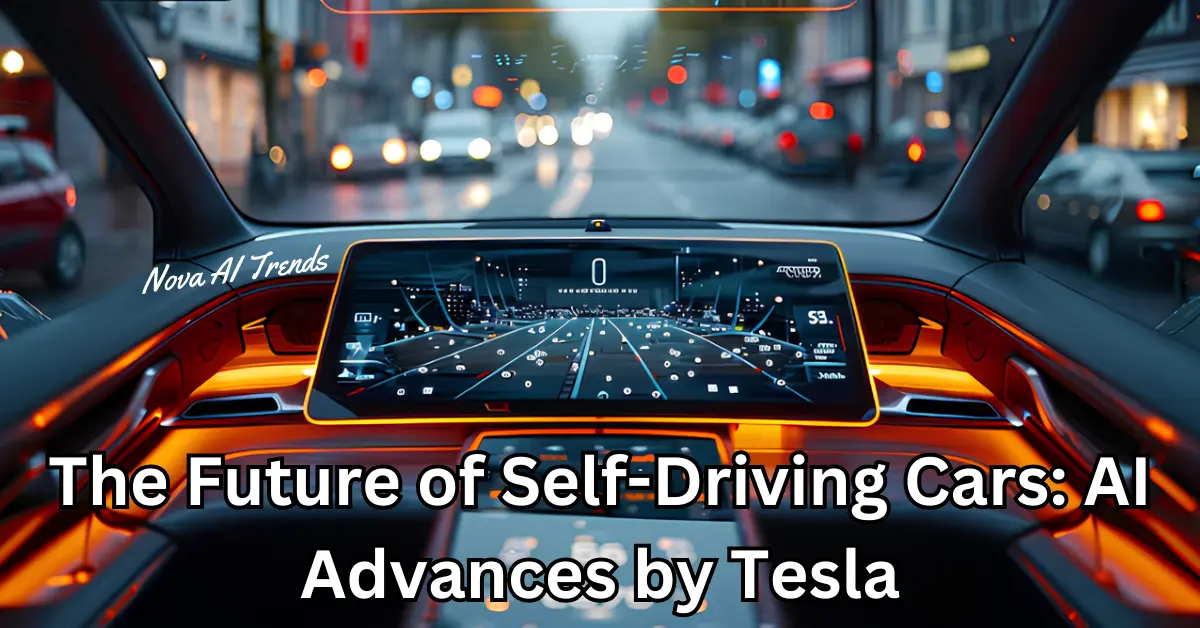
The Future of Self-Driving Cars: AI Advances by Tesla
The car domain remains on the cliff of extreme change, impelled by the quick progressions in artificial intelligence (AI) and machine learning. First among the pioneers in this progressive journey is Tesla, an organization eminent for unendingly extending the constraints of electric vehicles and self-driving technology. Looking into the fate of independent vehicles, Tesla’s AI forward leaps arise as a light of development, ready to reclassify our relationship with transportation.

The Inception of Tesla’s Autonomous Aspiration
Tesla’s introduction to autonomous driving started with the uncovering of its Autopilot framework in 2014. At first, conceptualized as an advanced driver assistance system (ADAS), Autopilot has gone through significant advancement, saddling AI to expand its abilities. The framework’s embodiment lies in a complex group of sensors, cameras, and radar, all orchestrated by AI calculations to work with semi-autonomous driving.
The Crucial Role of AI in Tesla’s Autonomous Endeavors
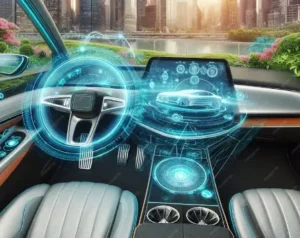 Artificial intelligence is the foundation of Tesla’s autonomous aspirations. The organization’s procedure depends on “vision-based” AI, which prevalently depends on cameras and brain organizations to unravel and respond to the climate. Separating from many opponents who utilize LIDAR (Light Detection and Ranging) technology, Tesla’s obligation to camera-based vision is a specialized and philosophical position, highlighting the power of certifiable vision in driving.
Neural Networks and Deep Learning
Vital to Tesla’s AI is a set-up of brain networks intended to copy the human mind’s visual data handling. These profound gaining models are prepared on huge datasets accumulated from Tesla’s armada of vehicles, which aggregates across a large number of miles every day. This information is instrumental in helping the AI to perceive and answer assorted driving situations, from distinguishing walkers and different vehicles to exploring complex crossing points and variable atmospheric conditions.
Full Self-Driving (FSD) Beta
In 2020, Tesla presented the Full Self-Driving (FSD) Beta program, a milestone in its independent driving excursion. FSD Beta addresses a high-level emphasis on Autopilot, offering functionalities, for example, programmed path changes, metropolitan routes, and acknowledgment and reaction to traffic lights and stop signs. Utilizing Tesla’s most recent AI progressions, FSD Beta plans to convey a more exhaustive independent driving experience, edging nearer to the objective of full independence.
The Obstacles to Achieving Full Autonomy
Despite remarkable progress, accomplishing full independence remains an overwhelming test. Autonomous vehicles should explore a broad exhibit of driving circumstances and situations, some intriguing or extraordinary. Guaranteeing security and unwavering quality in these settings requires progressed AI as well as thorough testing and approval.
Data Collection and Simulation
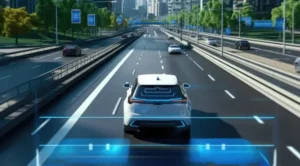 To overcome these difficulties, Tesla utilizes broad information assortment and reproduction. The organization’s armada ceaselessly assembles certifiable driving information, which is then used to refine the AI models. Past genuine information, Tesla takes part in reproduced conditions to test and approve its independent frameworks’ presentation. These recreations empower the AI to experience and gain from situations that might be risky or unreasonable to test as a general rule.
Regulatory and Ethical Considerations
Aside from specialized obstacles, there are huge administrative and moral contemplations to address. Autonomous driving guidelines vary broadly across districts, and accomplishing consistency requires ceaseless coordinated effort with administrative bodies. Moreover, moral issues encompassing AI’s dynamic cycles in basic circumstances request cautious consideration. Tesla’s way to deal with these issues will be urgent in the boundless acknowledgment of its self-driving technology.
The Competitive Landscape
Tesla isn’t singular in the autonomous driving race. Substances like Waymo, Voyage, and Argo AI are additionally taking eminent steps. Be that as it may, Tesla’s upward reconciliation — from assembling to programming improvement — manages the cost of a novel benefit. By controlling both equipment and programming, Tesla can quickly emphasize and improve its autonomous systems, possibly outperforming contenders dependent on organizations and outsider providers.
Waymo: The LIDAR Pioneer
Waymo, an auxiliary of Alphabet Inc., takes on an alternate way to deal with independence, vigorously depending on LIDAR innovation. LIDAR utilizes laser pillars to produce point-by-point, high-goal guides of the climate, offering exact distance estimations. Waymo’s vehicles amalgamate LIDAR with cameras and radar to accomplish elevated degrees of precision and unwavering quality. Albeit powerful, this approach presents huge expense and intricacy.
Cruise and the Urban Challenge
Cruise, backed by General Motors, focuses essentially on metropolitan conditions. The organization has been trying its autonomous vehicles in thick cityscapes like San Francisco, handling the remarkable difficulties of metropolitan driving. Journey’s philosophy includes a mix of LIDAR, radar, and cameras, similar to Waymo. Its organization with a significant automaker like GM supplies it with important assets and skills, situating it as a considerable competitor in the autonomous driving domain.
The Future of Self-Driving Cars
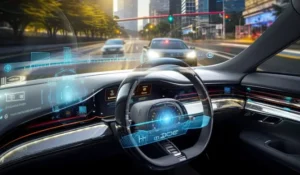 As AI keeps on propelling, the fate of self-driving cars shows up progressively propitious. Tesla’s vision of full independence rises above simple comfort; it imagines a transportation worldview that is more secure, more productive, and open to all.
Enhanced Safety
A vital advantage of autonomous vehicles is upgraded security. Human blunder is a main source of car crashes, and AI-driven vehicles can lessen these episodes essentially. By relentlessly checking the climate and going with immediate choices, independent vehicles can answer perils more quickly and precisely than human drivers.
Increased Efficiency
Autonomous vehicles additionally guarantee uplifted productivity in transportation. AI can upgrade driving examples, ease gridlock, and improve eco-friendliness. For example, independent vehicles can help arrange developments, cultivating smoother traffic streams and decreasing energy utilization.
Accessibility and Mobility
Another essential benefit is the potential for increased availability and portability. Independent vehicles can offer transportation answers for people incapable of driving, like the older or impaired. This inclusivity can change lives, giving more noteworthy freedom and working on personal satisfaction for some.
Environmental Impact
The change to electric autonomous vehicles can likewise yield positive natural results. By decreasing dependence on petroleum products and enhancing driving effectiveness, autonomous electric cars can bring down ozone-depleting substance emanations and a cleaner climate. Tesla, with its solid supportability center, is strategically set up to lead this drive.
The Road Ahead for Tesla
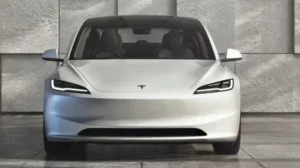 Looking forward, Tesla’s guide for autonomous driving is both aggressive and promising. The organization’s constant interest in AI and machine learning, combined with its immense information assortment abilities, positions it at the front of the autonomous driving revolution.
The Role of Dojo
One of Tesla’s most intriguing AI advancements is the advancement of its custom supercomputer, Dojo. Intended to prepare brain networks at an uncommon scale, Dojo will essentially upgrade Tesla’s ability to process and gain from the gigantic information created by its armada. This capacity will speed up the turn of events and refinement of Tesla’s independent driving calculations, bringing full independence closer to acknowledgment.
Expansion of FSD Capabilities
Tesla plans to extend its Full Self-Driving system’s abilities ceaselessly. With normal over-the-air programming refreshes, the organization can acquaint new highlights and enhancements with existing functionalities. This iterative methodology permits Tesla to answer client criticism and refine its autonomous systems in light of true execution.
Regulatory and Market Expansion
As administrative scenes develop, Tesla is ready to expand its autonomous driving technology into new business sectors. The organization’s proactive commitment to controllers and obligation to somewhere safe and straightforwardness will be pivotal in acquiring endorsement for independent tasks in assorted areas. Moreover, Tesla’s worldwide presence and memorability give a strong groundwork for the far-reaching reception of its self-driving innovation.
Conclusion
The fate of self-driving cars is an invigorating boondocks, with Tesla in charge through its spearheading AI advancements. From Autopilot to Full Self-Driving Beta, Tesla’s journey showcases AI’s power. This technology is reshaping transportation fundamentally. The future promises secure, efficient, and accessible transportation due to Tesla’s quest for advancement. Their commitment surpasses traditional limits. The way to full independence may be burdensome. With AI guiding the course, the goal promises a revolutionary leap for society.